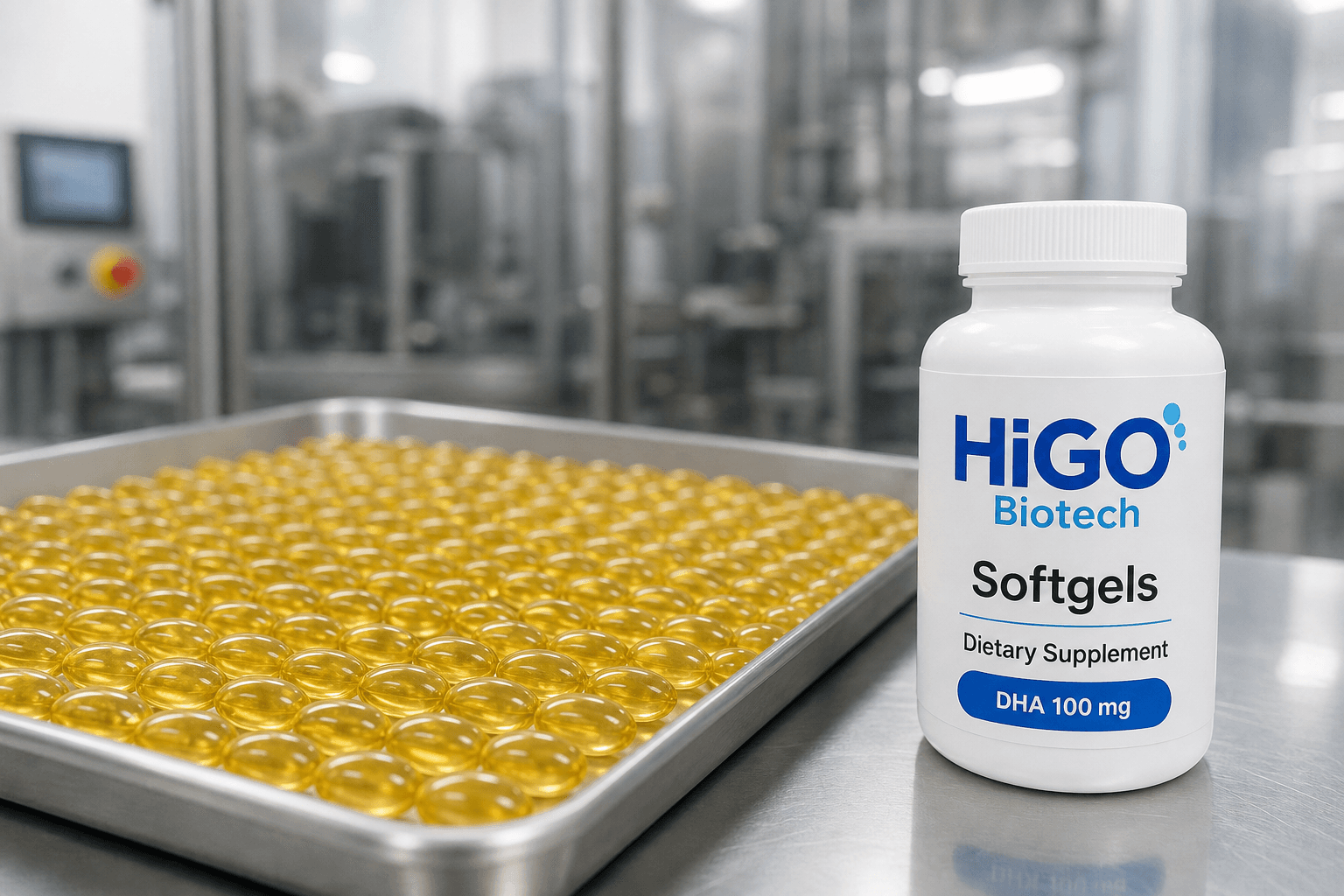
A finished softgel is a single sealed unit — fill on the inside, gelatin shell on the outside, no seam a consumer can see. Producing that at scale is one of the more technically demanding things a supplement manufacturer does. Here's how it actually works.
Why softgels are hard
Softgels combine two materials that don't naturally want to cooperate: a liquid fill (often an oxidation-sensitive oil) and a gelatin shell that has to form, fill, and seal in one continuous operation. Get any stage wrong and you get leaks, underdoses, or instability on the shelf.
The 8 steps
1. Raw material inspection
Every incoming active and excipient is verified against its Certificate of Analysis (COA) before it's released to production. For oils, this includes peroxide value and fatty-acid profile.
2. Formulation preparation
The fill mass is blended and degassed. Active content is standardised to your specification, and the mix is held under conditions that protect oxidation-sensitive ingredients.
3. Gel mass melting
Gelatin, glycerin, and water are melted together at a controlled temperature and viscosity. This is the shell — and its consistency determines whether the softgel will form, fill, and dry correctly.
4. Encapsulation
This is the heart of the process. A rotary die machine spreads two ribbons of gel mass, injects the fill between them, and stamps them shut in a single continuous rotation. Each softgel is formed, filled, and sealed in one motion.
5. Drying & conditioning
Freshly formed softgels are wet and soft. They cascade through low-humidity drying tunnels to reach their final shell hardness — a process that can take hours to a couple of days depending on the formula.
6. Visual inspection
Optical and manual sorting removes any malformed, leaking, or out-of-spec units. This is also where subtle defects (thin shells, air bubbles) get caught.
7. Packaging
Softgels are bottled, blistered, or sachet-packed with your label and artwork applied. Moisture control matters here — the wrong packaging can undo the drying work.
8. Final QA & release
Finished-goods testing (assay, microbial, weight) and a documentation review close out the batch. Only then is it released for shipment.
What this means for your project
Two practical takeaways for brand founders:
- Sampling takes 2–3 weeks minimum. Softgel sampling isn't a mockup — it's a mini production run to validate fill, shell, and drying. Anyone promising faster is cutting a corner.
- Stability is the long pole. A softgel can look perfect and still fail stability months later. Real shelf-life testing runs on a separate, longer timeline than sampling — build it into your launch schedule.
Choosing a softgel partner
Ask a manufacturer to walk you through their encapsulation setup, their drying tunnel capacity, and their stability testing program. If they can't answer in detail, they're not a softgel partner — they're a broker.
Softgels are a premium format that commands premium pricing. Built right, they're worth it.


 Free Quote